

Key Takeaways
- Start simple: a clear sentence grounded in values is more powerful than lofty paragraphs.
- Use tools—prompts, templates, mindful pauses—to craft a pledge that sticks.
- Group pledges spark walk for peace momentum and community healing.
Introduction
Knowing how to write a peace pledge peace guide purposefully turns intention into action. In a few thoughtful sentences you can name commitments, model nonviolent responses, and invite others to join a gentle culture shift.
This short post offers practical tools and starting steps—mindful prompts, low-cost materials, and quick group ideas—so you can create a pledge that feels authentic and sustainable, whether alone, in a classroom, or at a community circle.
Why a modest pledge really matters
A pledge is less about perfection and more about clarity. Framing a few achievable behaviors—listening first, pausing before responding, repairing harm—creates patterns that support conflict resolution and peace education.
- Impact example: a neighborhood group agreed to “pause, ask, listen” during disputes; tension dropped because language guided behavior.
Tools that actually help you write a pledge
Use simple, low-cost tools to turn thought into a tangible pledge. These make drafting quicker and help groups stay focused on nonviolence without overcomplicating the process.
- Prompt cards: Pre-written prompts (values, behaviors, repair steps) to mix-and-match into a single pledge sentence.
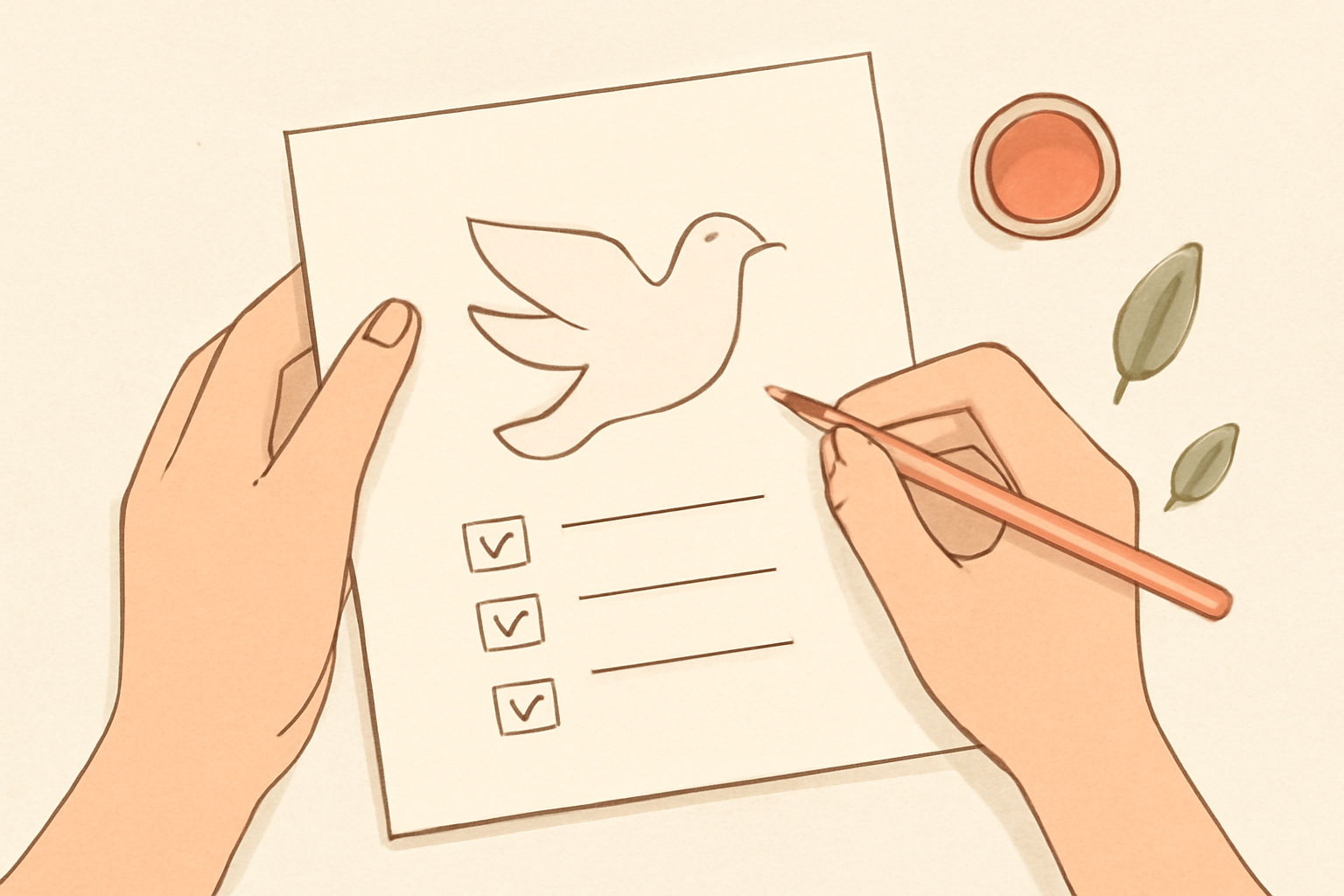
- Sticky-note wall: Collect small commitments from many people, then synthesize common threads into one shared pledge.
- Quiet timer: A 5-minute mindful pause helps writers choose words without reactivity—great for conflict resolution skills practice.
- Template starter: “I commit to __[action]__ when __[situation]__, and to __[repair action]__ if I cause harm.”
Quick steps to draft your pledge today
Follow this short, skimmable flow to produce a usable pledge in under 20 minutes.
- Set the intention: decide who this pledge is for (you, your family, class, group).
- Choose 1–3 behaviors (e.g., listen first; speak calmly; offer repair).
- Write one clear sentence using the template above.
- Try it aloud and adjust language for warmth and clarity.
- Practice it once in a role-play or during a short mindfulness pause.
Ways groups and schools can write pledges together
Collective pledges build shared norms. Use brief, inclusive processes so everyone feels ownership and the result supports peace education and community healing.
- Circle method: each person shares one value; the facilitator notes repeats and crafts the pledge language from the common words.
- Student-led drafts: in classrooms, have students create personal pledges, then vote on a class pledge to practice conflict resolution tools.
- Walk-and-write: take a short reflective walk together, then pause to jot commitments—combining movement with mindfulness helps anchor intentions.
Conclusion
Small, clear pledges are practical steps toward a culture of nonviolence and repair. Try the tools above, share your pledge with neighbors, and join the movement to cultivate everyday peace. Explore more ideas, activities, and community initiatives at walkforpeace.us and invite others to participate, share, and create pledges that heal.
